Monarch Caterpillars on Your Milkweed
Turn over a milkweed leaf this week, near the top of the plant where the growth is fresh. The monarchs that reached southern Ontario through late May and June have been laying since they arrived, and by mid-July a single patch can be carrying eggs, half-grown caterpillars and a chrysalis all at once. This is the month the plant earns its place.
A female monarch lays on milkweed and nothing else, because her caterpillars eat milkweed and nothing else. That's the whole relationship. On Hortus, 54 gardeners grow at least one milkweed.
What does a monarch egg look like?
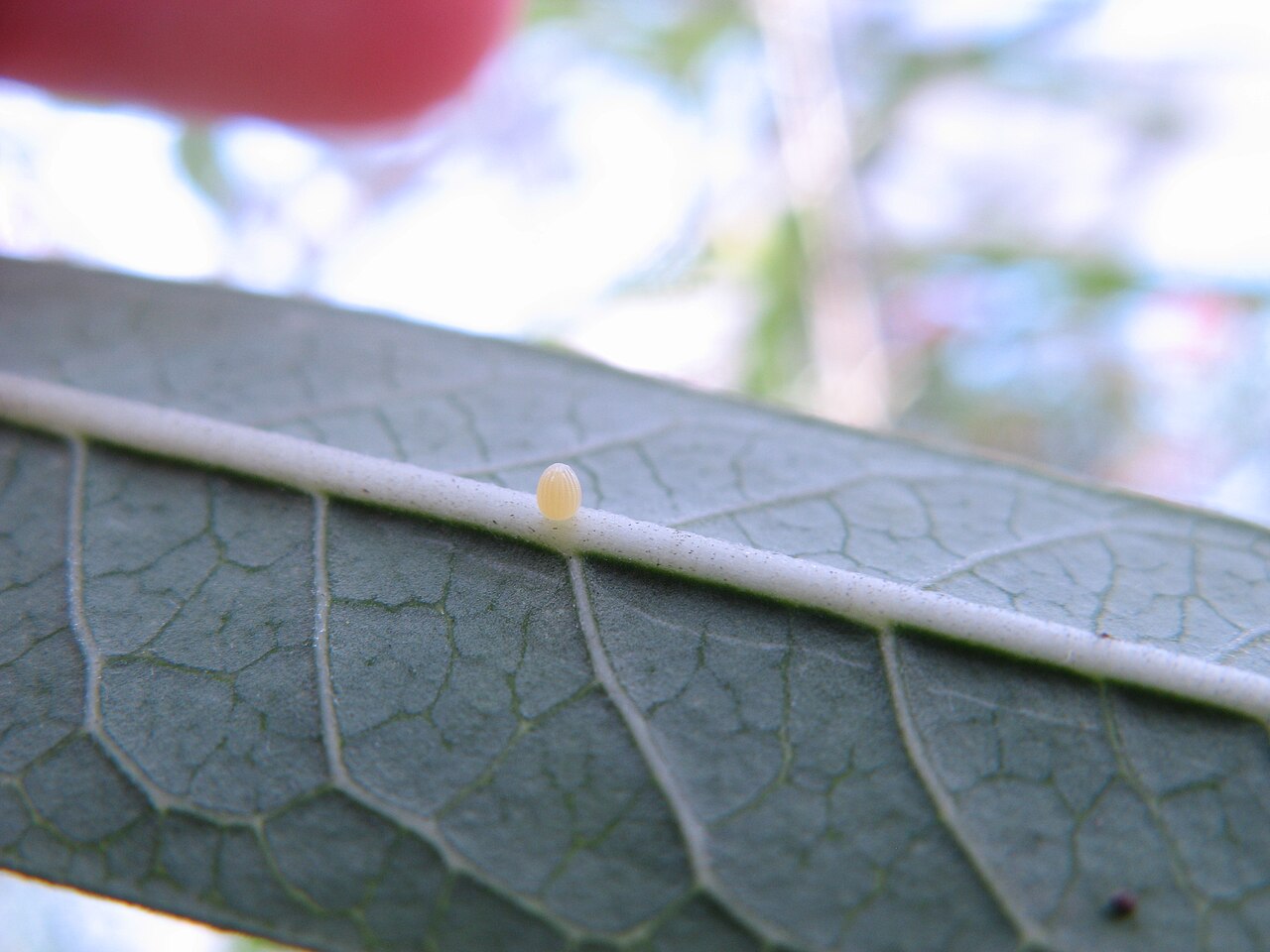
Small enough to walk past. It's a pale cream dome, ridged, about the size of a pinhead, stuck to the underside of a leaf, and there's usually just one per leaf. It hatches roughly four days after it's laid, so a leaf with an egg on it today has a caterpillar on it by the weekend.
How do you know a caterpillar has been at it?
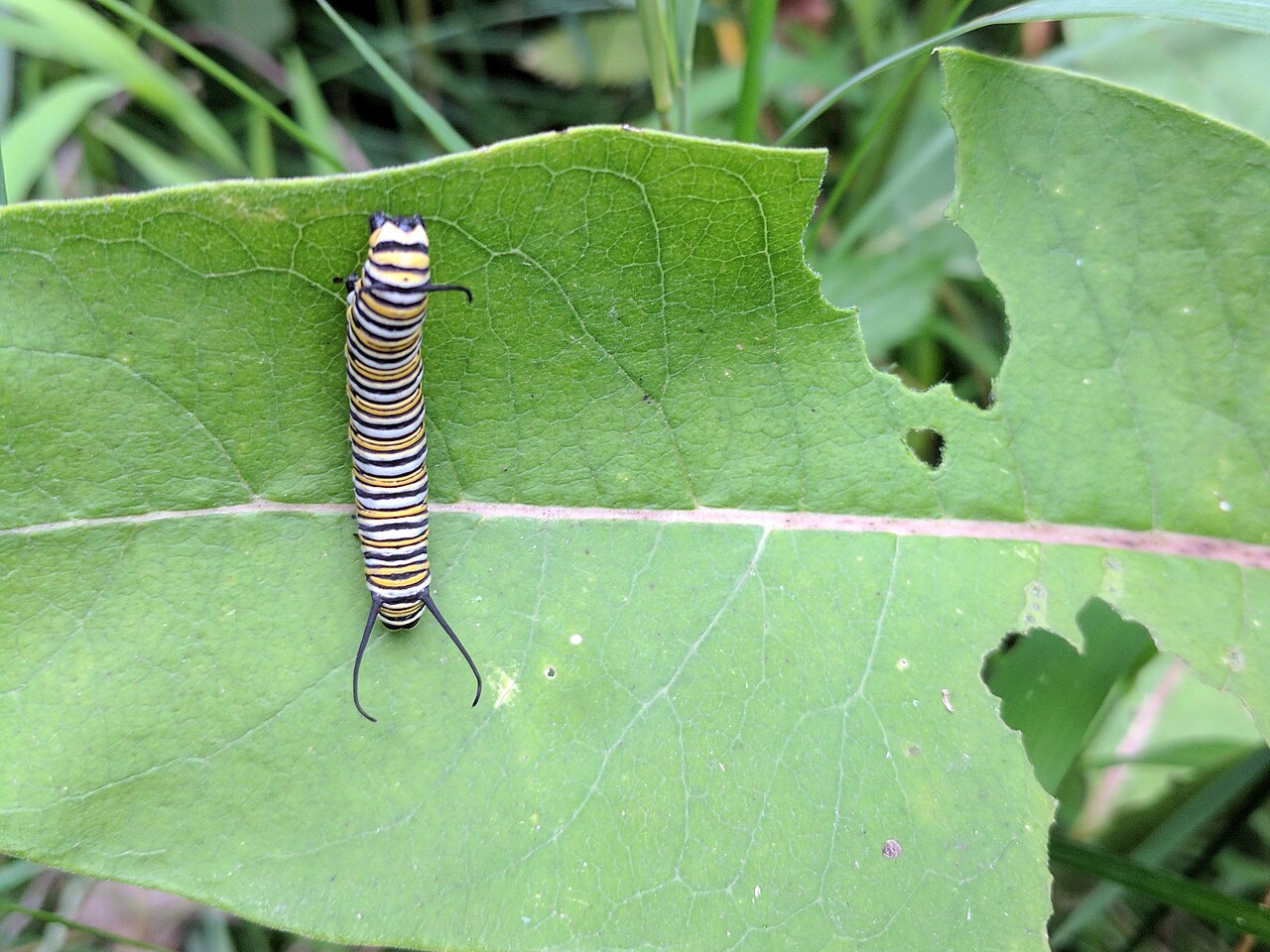
You see the damage before you see the caterpillar. Ragged holes, chewed leaf edges, dark specks of frass on the leaves underneath. The caterpillar itself is banded in yellow, black and white with a pair of black filaments at each end, and it grows through five stages in about two weeks, shedding its skin between each, which is why you sometimes find a shrivelled cast skin left behind on a leaf. Then it goes. A full-sized caterpillar that vanishes has almost always wandered off to pupate somewhere else in the garden.
Where do they pupate?
Rarely on the milkweed, which is why people assume the worst. A full-grown caterpillar will travel a surprising distance, then hang itself upside down in a J from a silk pad and shed its skin one last time. What's left is the chrysalis: jade green, smooth, with a line of metallic gold dots near the top, and about two centimetres long. Look on fence boards, deck rails, the underside of a windowsill, the stems of whatever else is growing nearby. It sits there for roughly two weeks, going dark and then transparent in the last day or so, when you can see the folded wings through the case.
Every spray decision you make this month is a decision about whether these caterpillars finish.
What not to do
Don't spray anything on or near the milkweed. Insecticides don't distinguish between a pest and a monarch caterpillar, and the ones sold as natural or organic kill them just as thoroughly.
The yellow aphids that cluster on milkweed stems in midsummer look far worse than they are. Knock them off with a hard jet of water, or squash them between your fingers and move on. Reaching for a spray to deal with aphids is how most well-meant gardens lose their caterpillars.
Skip tropical milkweed (Asclepias curassavica), the non-native sold at some garden centres. It stays green long past the point our natives die back, and on plants that never go dormant a protozoan parasite builds up season after season.
And leave the caterpillars where they hatched. Raising a batch indoors feels protective, but crowding them raises the risk of disease, and they do perfectly well on the plant.
What else is on my milkweed?
Plenty, and almost none of it is a problem. Tufted orange and black caterpillars feeding shoulder to shoulder are milkweed tussock moths, a native species doing exactly what monarchs do. The orange-and-black beetles with long antennae are red milkweed beetles, and the flat orange-and-black bugs clustered on the seed pods later in the season are large milkweed bugs. All of them are native, all of them are supposed to be there, and none of them warrants a spray. Milkweed feeds a whole small community, not one famous butterfly.
Which milkweed should you be growing?
All three of our common natives feed caterpillars, and they want different corners of a yard. Common Milkweed is the vigorous one, happy in average or dry soil and full sun, spreading by root, so give it room or put it where spreading won't bother you. Swamp Milkweed wants steady moisture, which makes it the plant for a low, damp spot or a rain garden. Butterfly Milkweed stays compact and well behaved in a hot, dry, sunny bed. Grow more than one and a female has a choice, and you have fresh leaves for longer once the caterpillars strip the older ones.
The caterpillars on your plants in July are the parents of the generation that flies to Mexico.
What happens next
Most eggs don't make it. Weather, predators and parasitic insects take the large majority well before pupation, which is the honest argument for more milkweed rather than more intervention. More plants, more eggs laid, more caterpillars that come through. The monarch is a species at risk in Canada now, and a few plants in a back garden are doing real work.
Check the leaf undersides every few days while the season runs, and if you have room for one more plant, make it a milkweed. The native plant library will tell you which species suits your soil.
Plants Mentioned in This Article
Find native plants near you
Browse nurseries that carry the species mentioned in this article, filtered to your area.
Browse nurseries →Need help with your garden?
Connect with landscapers who specialize in native plant gardens and pollinator habitat.
Find a landscaper →